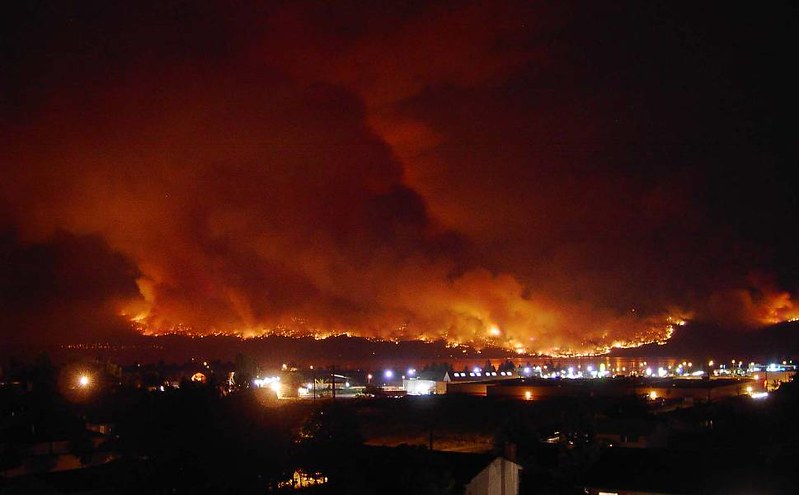

It’s been a devastating year for forest fires in Canada.
According to University of Ottawa professor Ryan Katz-Rosene:
- So far this year, 15.4 million hectares of forest have burned in Canada. Double the previous record.
- 225,745 individuals are “2023 Canadian Wildfire Evacuees”. That’s more people than live in Regina. Put another way: 1 in 170 Canadians have faced wildfire evacuation orders this year, and the majority of Canadians have experienced dangerous levels of wildfire smoke.
- By year’s end, carbon dioxide emissions from Canadian wildfires in 2023 will likely be more than two-times what the entire Canadian economy emitted in 2021.
What has the impact been on events?
Since May I’ve been tracking event disruptions that have been attributed to wildfires and smoke in Canada. Here is what I’ve learned so far:
- Wildfires in British Columbia have caused at least 32 event cancellations in the province since August 9. Of note among these are the Ironman Canada Penticton event, estimated to generate $15 million in economic benefit, and the Salmon Arm Roots and Blues Festival, which draws 30,000 guests to the Shuswap. Striking among the list is the very high number of small and medium-sized events hosted by nonprofits that help forge ‘community connective tissue’ in the region, including fairs, concerts, sports meets, movie nights and markets.
- Standing evacuation orders in the Northwest Territories continue to impact events in Canada’s north. Notable cancellations thus far include the Canadian Table Tennis Championships scheduled in Hay River for September, and Fore! The Chamber, a major fundraiser benefiting Skills Canada NWT, which supports programs for NWT youth to explore skilled trade and technology careers. The territorial election has also been postponed by six weeks.
- Wildfires and smoke in eastern Canada earlier in June led to the cancellation of major outdoor events in Ontario and Quebec, including the Mont-Tremblant triathlon, which provides an estimated $20 million in economic benefit. Extreme air quality warnings in the eastern US over the five days from June 6-10 led to at least 47 documented event disruptions outside of Canada, including major MLB, WNBA and NWSL matches. Last week research published by the World Weather Attribution initiative, a U.K.-based group that estimates the contribution of climate change to individual weather events, found that changing climate made the weather conditions that drove the Quebec wildfires two times more likely.
While I intend to continue tracking the impact of wildfires and smoke on events with a primary focus on Canada, I’m asking for help to expand this effort and make it more valuable and relevant to the worldwide event community.
So, what do you say? Any citizen-researchers out there who might want to:
- Discuss key data that is important to track when it comes to events disrupted by extreme weather, that is made more likely or severe due to climate change?
- Help develop consistent methods to collect information about how climate change risks are impacting events worldwide?
- Expand my limited data to include how climate change is impacting events in your local region, including historical data?
If you’d like to discuss or take on an aspect of this research please leave a comment so we can connect! Or if you know someone who might want to contribute, please share! And if you’d like to provide an example of an event impacted by extreme weather to include in this research please refer to this form.
 Eventcellany